Why organise a client event
Relationships with clients are built mainly through everyday work: punctuality, quality, quick answers. An event doesn't replace any of that. What it can do is something everyday work rarely does: put people face to face, with no order to close, and with time to talk. Client events are there to say thank you, to get to know each other better, to present something new and to introduce clients with shared interests to one another.
Four possible objectives
- Thanking long-standing clients for their trust.
- Deepening the relationship with important clients, or with new people at their companies.
- Presenting a product, a service or a new office.
- Building a community of clients who swap experiences.
Each objective leads to a different format. A thank-you evening shouldn't look like a sales presentation, and a presentation shouldn't feel like a party with no substance. If the heart of the event is a new product, the guide to the product launch goes into the details of the presentation.
When the timing is wrong
A client event held in the middle of an open problem, such as late deliveries or an unresolved complaint, risks looking like a distraction. Solve the problem first, then send the invitation. The calendar matters too: during the big trade fairs clients are busy elsewhere, and for meetings in those weeks there is a dedicated service on our site about Milan trade fairs.
The formats
The evening with clients
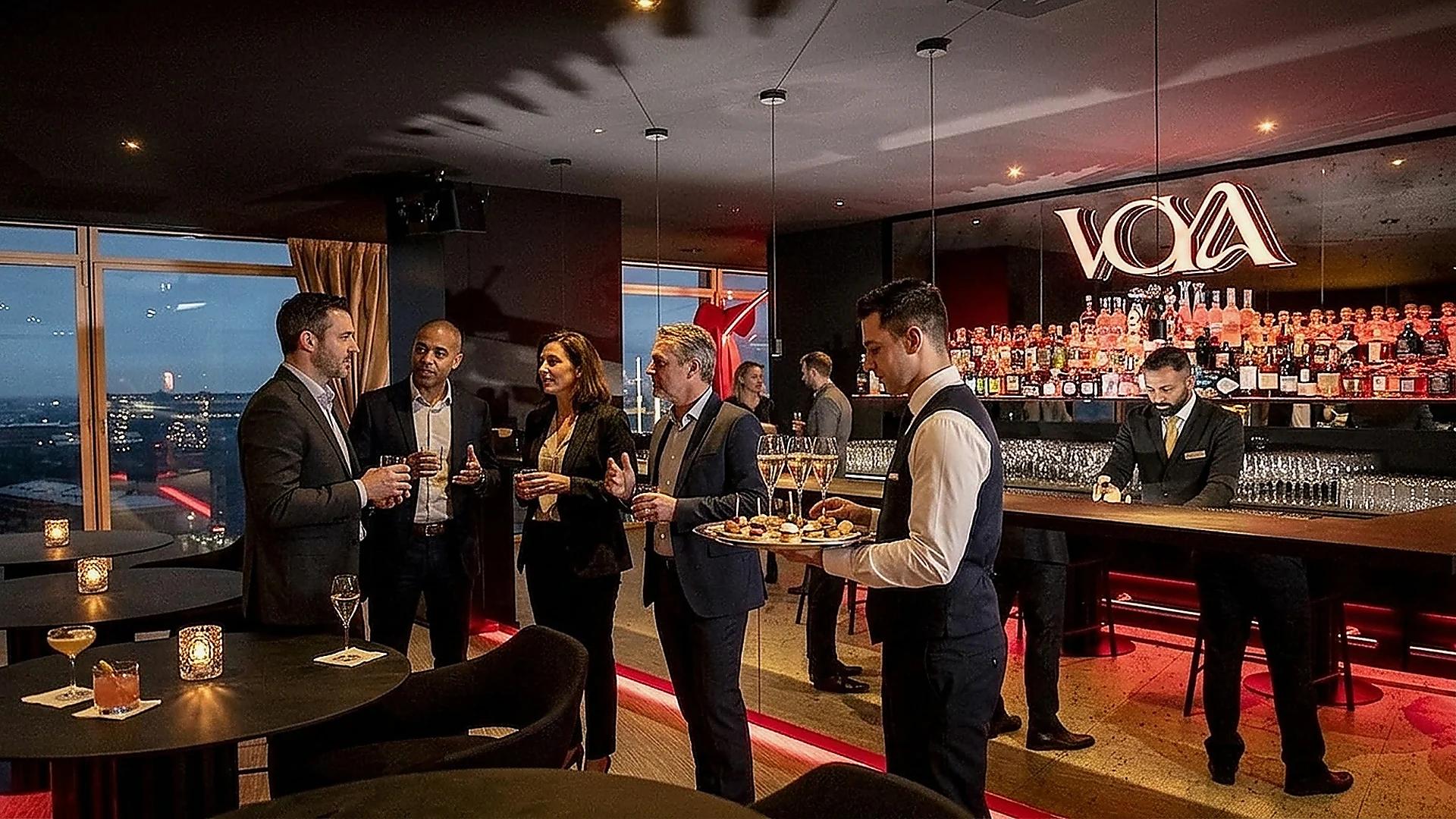
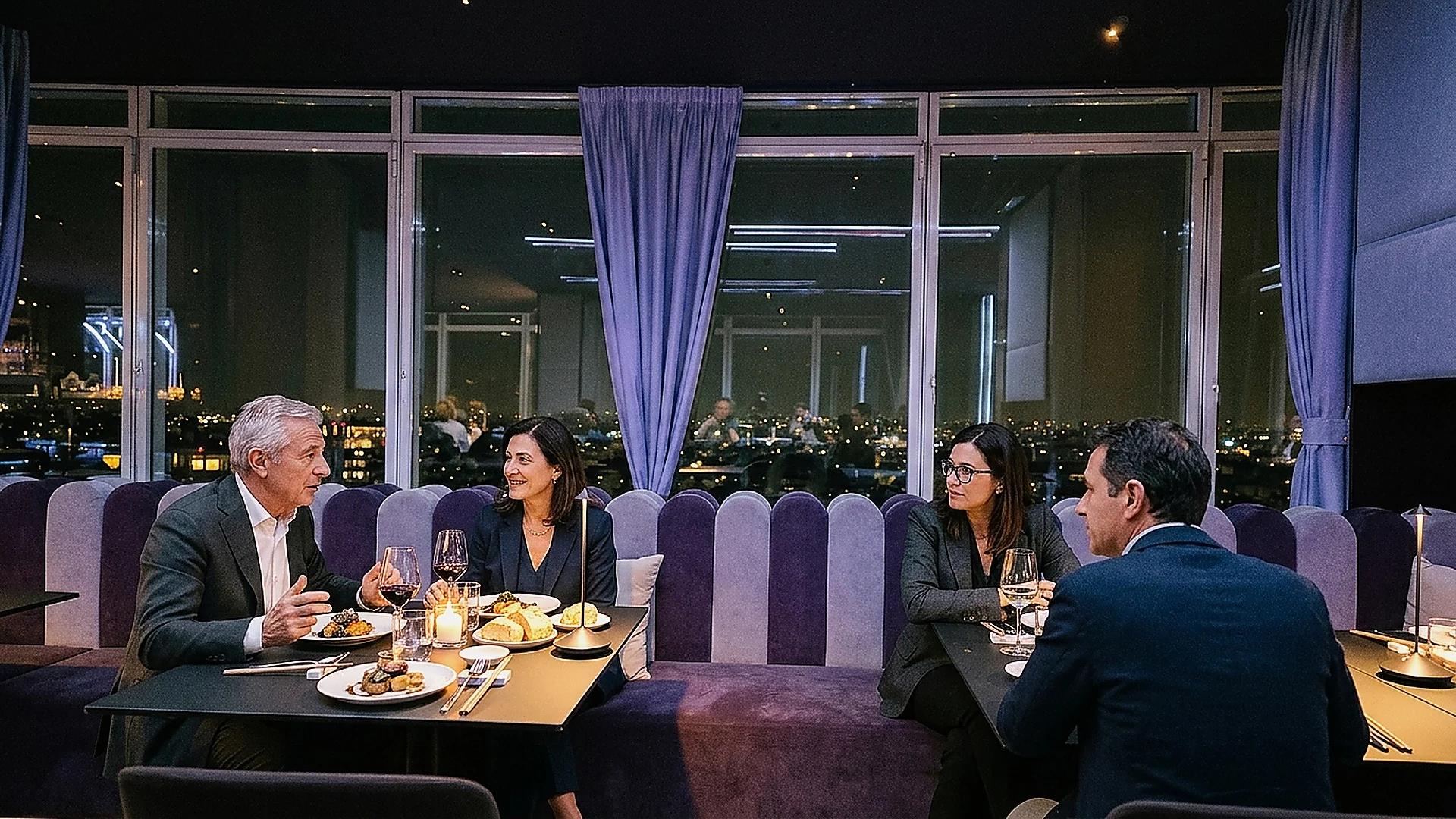
This is the most classic format: drinks, dinner, a moment of entertainment. It works for groups of twenty to a hundred people and leaves plenty of room for conversation. The room matters: a room with a view over the city, a restaurant with a private room, a venue with a small show. For the menu, drinks and timings of the dinner, everything on the page about corporate dinners applies.
The open day
An open day opens the company's doors to clients: a tour of the offices, the departments, the workshops or the production line, and meetings with the people they usually only hear on the phone. It is a powerful format because it shows how the work is really done. It is held during the day, usually on a weekday, with refreshments or lunch.
The business breakfast or lunch
For clients with full diaries, a short appointment in the morning or at lunchtime is easier to accept than an evening. A clear topic, a guest who speaks for twenty minutes, a table for discussion. It works well with small groups, of ten to thirty people.
The exclusive experience
A private visit to an exhibition, a tasting with a producer, a small concert, reserved seats at a show. This is the format for your most important clients, in small numbers. The value isn't in the cost but in the feeling of having access to something they wouldn't have organised on their own. More ideas for a corporate event with clients are collected in the guide to corporate event ideas.
The client-to-client meeting
Sometimes clients have more to learn from each other than from the company. A round table on a topic that concerns them, with testimonies from two or three clients, followed by drinks, creates useful connections for everyone and puts the company at the centre of a community.
| Format | Guests | Length | When | Objective |
|---|---|---|---|---|
| Evening with clients | 20-100 | 4 hours | Midweek evening | Thanking, getting to know each other |
| Open day | 20-150 | 3-5 hours | Weekday | Showing the company |
| Business breakfast or lunch | 10-30 | 1.5-2 hours | Morning or lunchtime | Exploring a topic |
| Exclusive experience | 6-20 | 2-3 hours | Evening or weekend | Key clients |
| Client-to-client meeting | 20-60 | 3 hours | Afternoon and drinks | Community, exchange |
The guest list
Who to invite
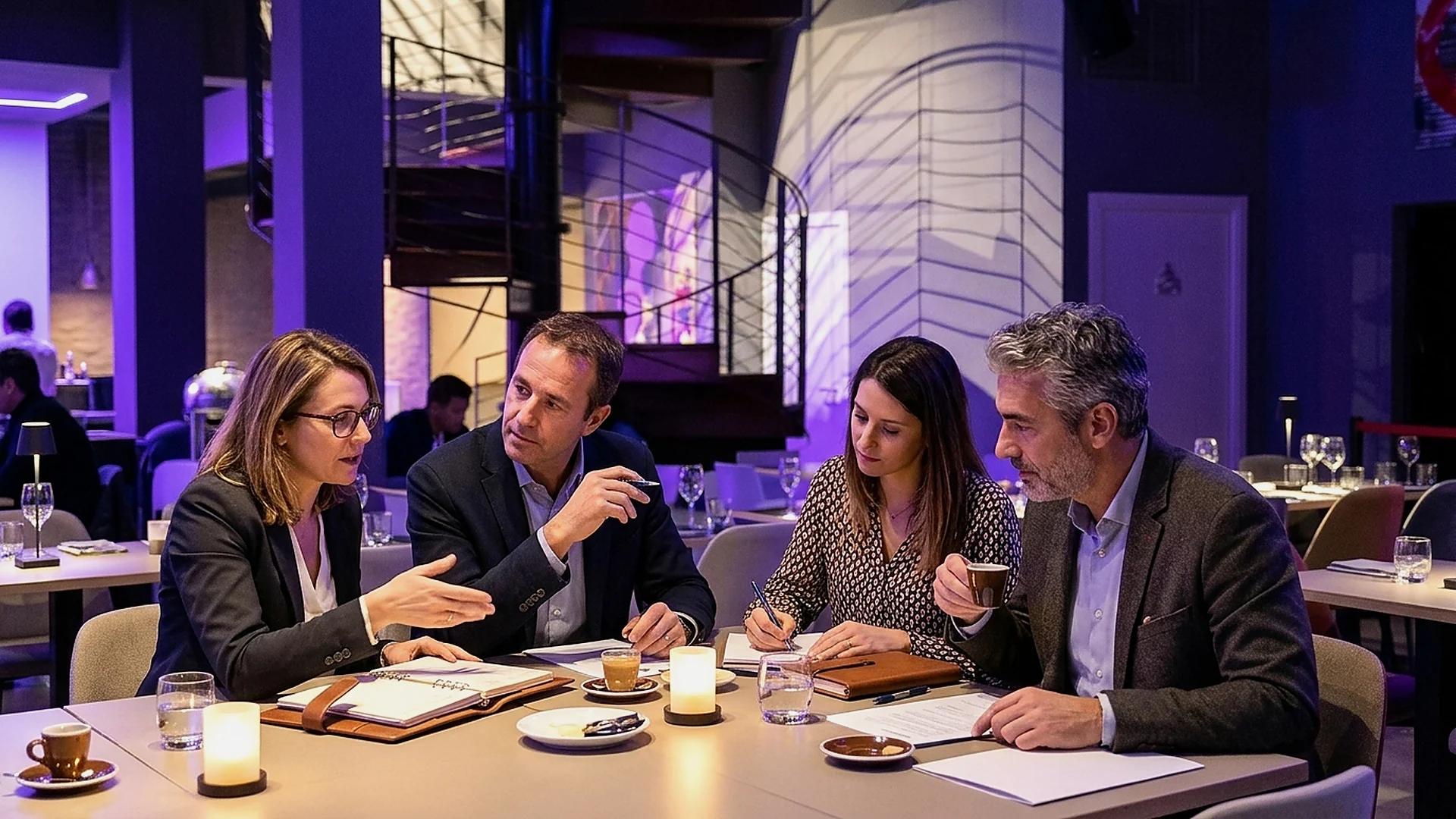
The list is the most important decision. Start from the objective: to say thank you, the clients you have worked with for a long time; to deepen relationships, the new people at client companies; to present something, those who might be interested in what is new. Involve the sales team: they know the people and they know who will appreciate the invitation and who will see it as one more commitment.
How many people per company
Decide whether you are inviting one person per company or several, and whether partners are included. Either choice is fine, but apply it consistently: a client who finds out that another client brought their spouse, when nobody suggested it to them, will remember.
The balance of the room
Think about who will meet whom. Two direct competitors at the same table can make both uncomfortable. A new client sitting next to a client who has been happy with you for years may get more out of it than from any presentation. Prepare the table plan with the sales team, not at the last minute.
The numbers to expect
Not everyone invited will come. For a midweek evening with good notice, a significant part of the list will say no or not reply. There is no percentage that holds for everyone: it depends on how close the clients are to you, the day and the time of year. Start from previous events if you have held any, and keep a reserve list to invite at a later stage.
The invitation
The save-the-date
Six to eight weeks before, a short, personal message: the date, the type of evening, a line on what makes it special. Ideally it comes from the salesperson who looks after the client, under their own name.
The formal invitation
Three to four weeks before, the real invitation: place, times, the essential programme, the dress code, a form to confirm with dietary requirements, a reply-by date and a direct contact. For an evening event, guests often wonder what to wear: cocktail attire or a dark suit is the safest indication. For the most important clients, a printed invitation or a phone call makes the difference.
The reminder
A week before, a practical message to those who have confirmed: address, how to get there, parking, times. The day before, a short greeting. People who confirm and then hear nothing for three weeks tend to forget.
The venue
What matters to clients
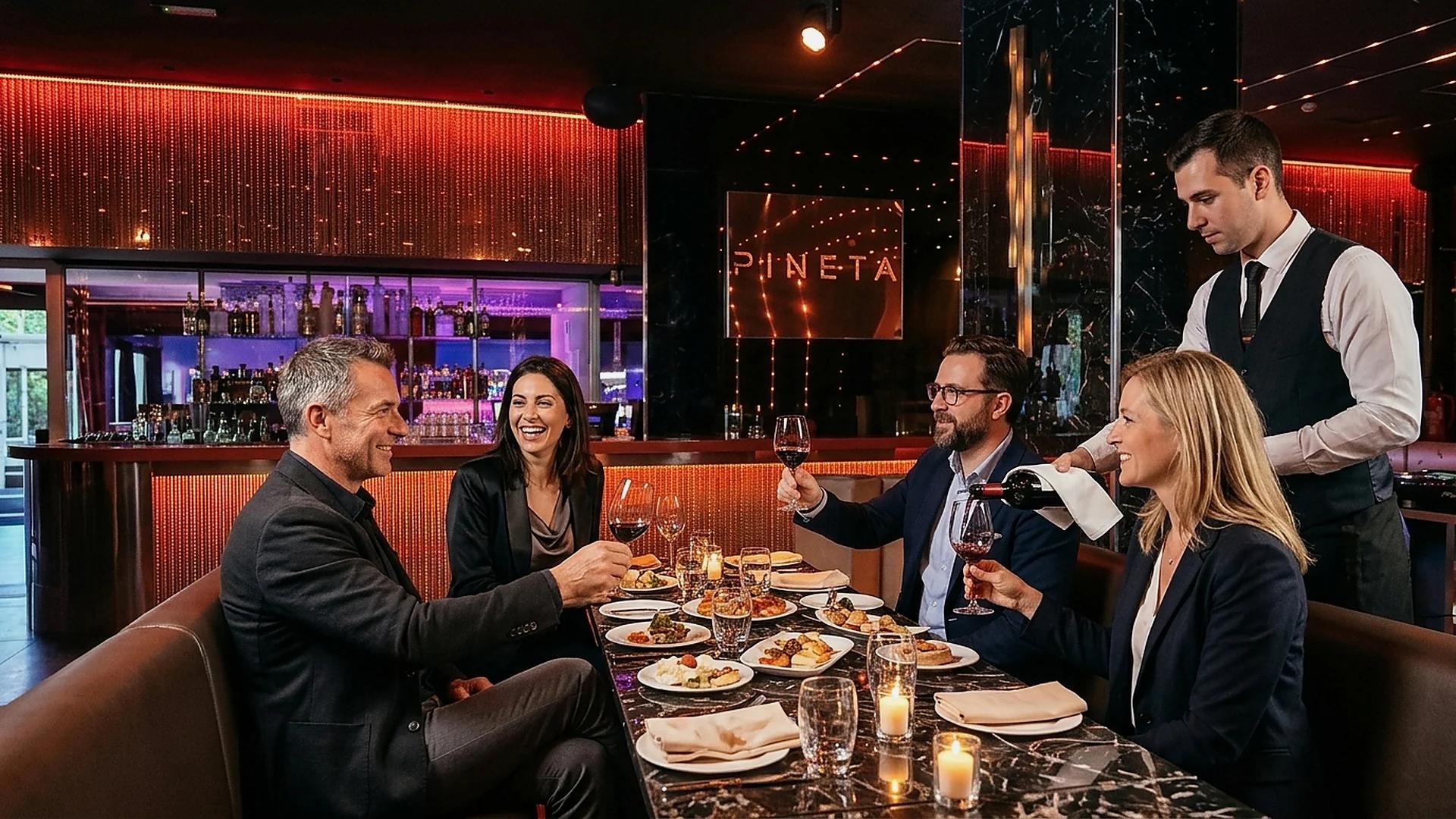
Easy access, a setting where people can talk without raising their voices, attentive service, and a detail that sticks in the mind: the view, the history of the place, an unusual menu. With clients, the venue should speak well of you without taking centre stage.
The districts of Milan
Brera and the historic centre for a classic atmosphere, Porta Nuova for contemporary Milan, Portello and CityLife for high-rise rooms with a view of the skyline, Tortona for spaces with character. Each district has its own guide: for example the one on corporate events in Porta Nuova and Isola. The list of corporate event venues we suggest most often is on its own page.
Noise
This is the criterion people forget most often. A beautiful room with loud music or an echo prevents the one thing clients came for: talking. On the site visit, try having a conversation at normal volume in the middle of the room.
The evening hour by hour
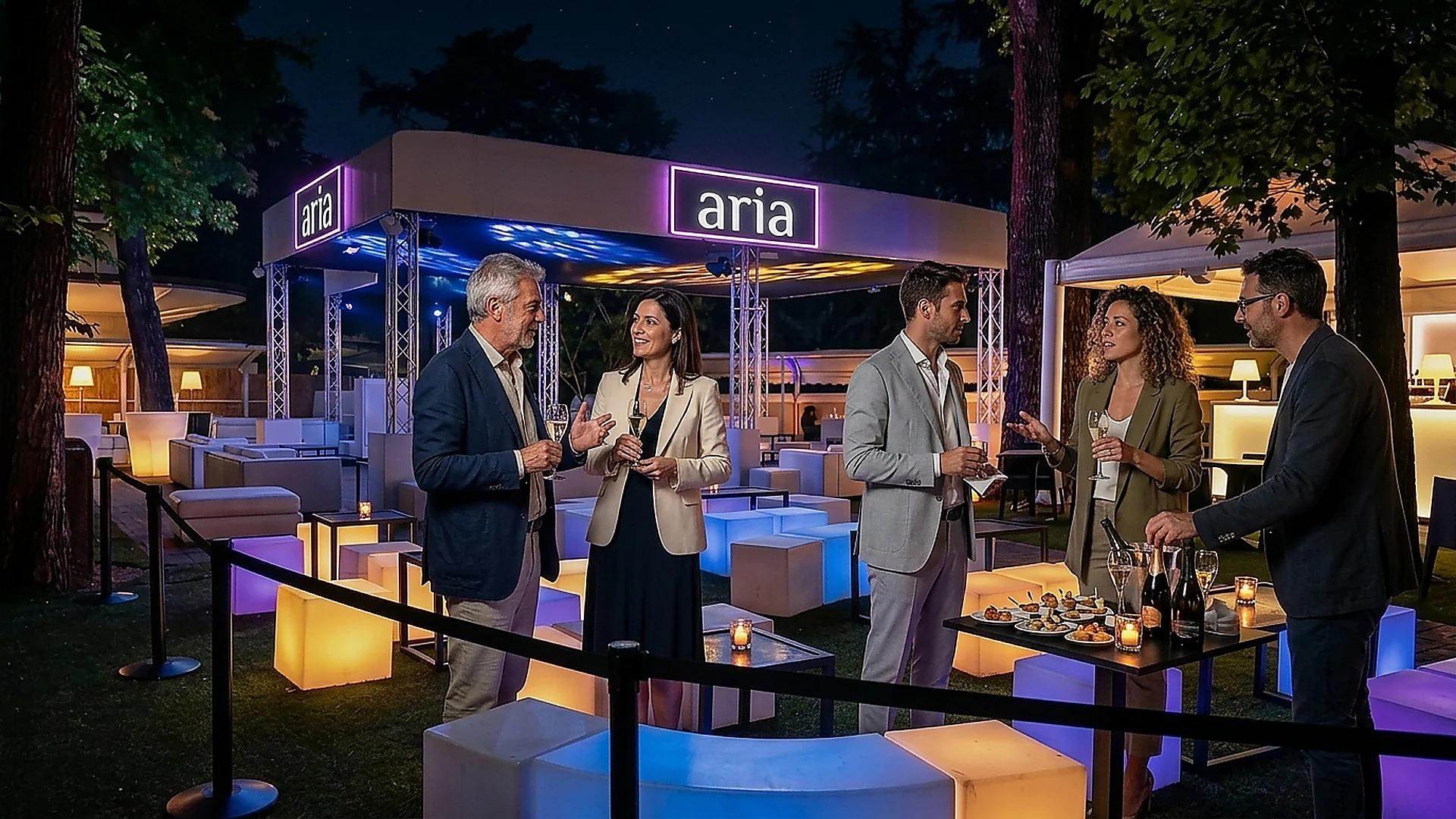
Here is an example of an evening for sixty clients, with drinks, a short speech, dinner and after-dinner.
| Time | What happens | Who |
|---|---|---|
| 19:00 | Arrival, welcome by name, cloakroom | Hostesses and sales staff at the entrance |
| 19:15 | Standing drinks | Sales staff with their clients |
| 20:00 | Welcome from senior management | Five minutes, no more |
| 20:10 | Served dinner | Mixed tables, each with a company host |
| 21:30 | Special moment | Tasting, short show, guest speaker |
| 22:00 | Dessert, coffee, bar | Free conversation |
| 23:00 | Goodbyes at the door | Gift and personal thank-you |
The welcome
The first few minutes count more than everything else. Every client should be greeted by name by someone who knows them, shown to the cloakroom and the bar, and introduced to someone else. Leaving a guest alone with a glass in their hand for ten minutes is the most common mistake, and the easiest to avoid.
The speech
Short, sincere, no slides. A thank-you, a piece of news if there is one, an invitation to enjoy the evening. Clients didn't come to listen to a sales pitch.
The special moment
A guided tasting, a musician, a chef talking about a dish, a short show. One well-chosen moment is more effective than three in a row. For an evening with a show during dinner, there is the site on dinner shows in Milan.
The role of your company's people
The sales team
They are the hosts for their own clients. They arrive early, greet them, introduce them and sit with them. They don't sell: they listen. Agree beforehand that contracts are not discussed, unless the client brings them up.
Senior management
The presence of senior management tells clients they matter. A director who goes round the tables and has a word with each guest is worth more than a long speech from the stage.
The event lead
One person with no clients to look after, whose only job is to make sure everything works: timings, kitchen, tables, the unexpected. If everyone from the company is busy with guests, nobody notices that table six has run out of wine.
Guests coming from outside Milan
If you invite clients from other cities or from abroad, the event starts before the evening: travel, hotel, transfers, perhaps a free morning in the city. For bookings, transfers and activities for guests' free time, the concierge service in Milan works with us. Remember to state clearly what you are paying for and what you are not.
Gifts and keepsakes
What to give
A well-chosen gift makes the evening last longer: a local product, a book linked to the theme of the evening, a printed photo of the event sent the next day. Avoid items with a big logo, which end up in a drawer.
Your clients' rules
Many companies, especially large ones and public bodies, have strict rules on the gifts and invitations their staff can accept. Ask the sales team discreetly: a gift that is too expensive can put the very person you wanted to thank in a difficult position.
After the event
The thank-you
Within two days, a personal message to every client who came, ideally from the salesperson who looks after them. A photo from the evening, a reference to a conversation you had. To those who couldn't come, a short message with your regards.
The commercial follow-up
During the evening, requests, questions and problems come up. Write them down straight afterwards, the same day, and assign each one to a person who will follow it up. A successful event with no follow-up is a missed opportunity.
Measuring
Attendance compared with invitations, meetings set up in the following weeks, comments received. Compare them with the objective and note what to repeat. For the full method, see the guide on how to plan a corporate event.
Client events through the year
The start of the year
January and February are quiet months for many client companies, and an invitation lands in a less crowded diary. It is the right time for a business breakfast on the year's news, or for a thank-you evening postponed from December, when clients receive too many invitations in the same month.
Spring and summer
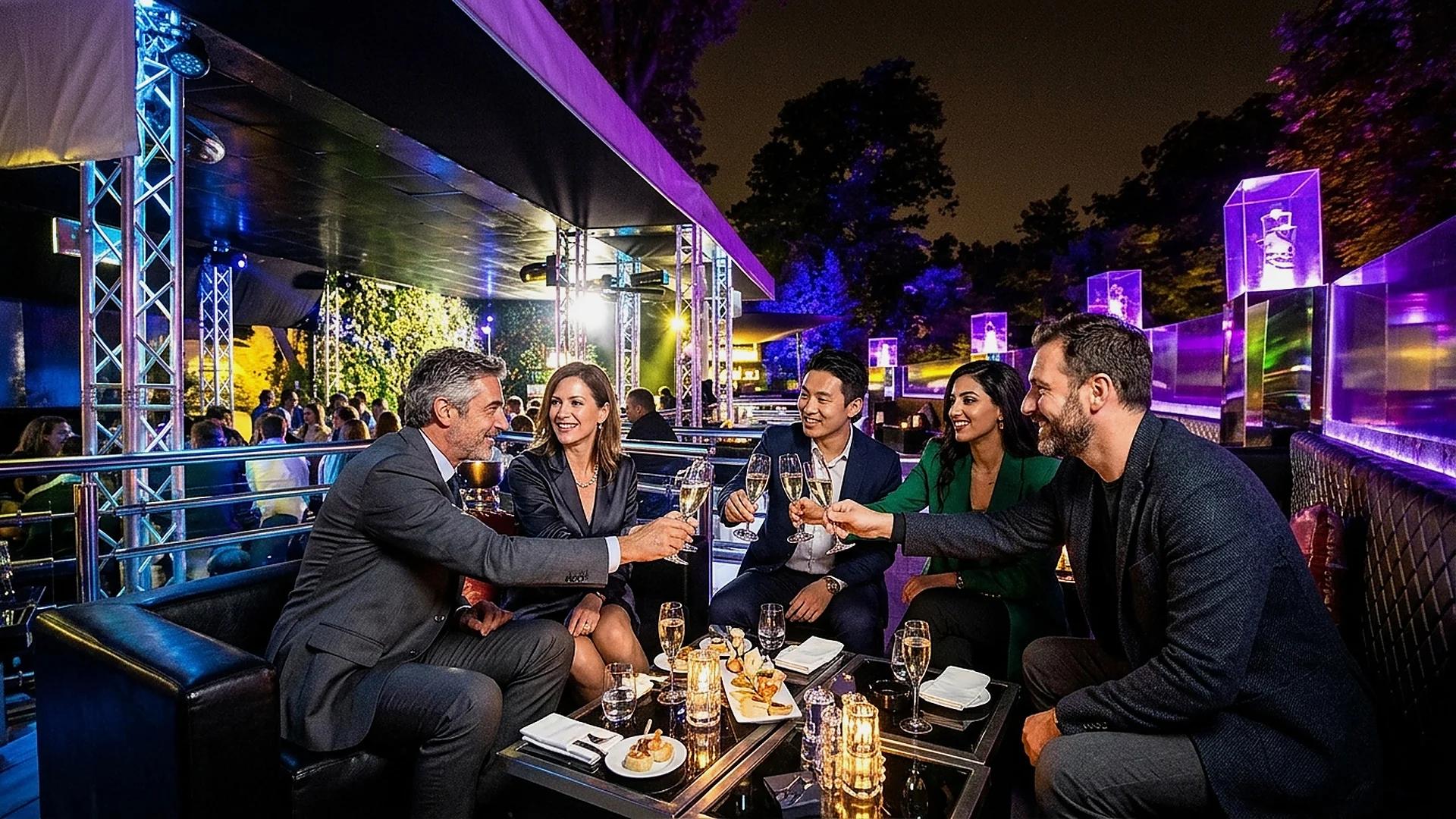
From April to July the evenings get longer and the terraces reopen: drinks outdoors with a view over the rooftops is a light invitation, easy to accept after work. Suitable terraces are collected on our site about Milan rooftops. Avoid bank holiday weeks and the second half of July, when many people are already on holiday.
Autumn
September and October are the months when budgets for the following year are decided: an event at this time reaches clients while they are planning. It is also the season of the big trade fairs, so check the calendar before fixing the date. If you are also holding a company meeting for your own sales team in the same period, keep the two dates well apart, so the team arrives at the client evening rested.
December
December evenings are the most in demand, and clients already have plenty of parties in their diaries. If you want an end-of-year event, invite early and choose a midweek day in the first half of the month. Otherwise, a well-written greetings card with a small gift can be worth as much as an evening.
The most common mistakes
- Turning the evening into a sales presentation. Clients notice, and they don't come back.
- A list drawn up at the last minute. The wrong people are invited and the right ones forgotten.
- All the sales staff at the same table. Talking to each other instead of to the clients.
- A room that is too noisy. Nobody can talk.
- No follow-up. Requests gathered during the evening get lost.
- Unsuitable gifts. Too expensive, too bulky, too covered in logos.