What a company convention is
A company convention usually means a meeting lasting one or two days that brings together staff, the sales network or partners to share results, strategies and objectives. What sets it apart from an ordinary company meeting is its scale and its ambition: it doesn't just inform people, it wants them to feel part of the same project. That is why it mixes listening in the plenary session, work in small groups and social moments.
Convention, meeting, kick-off
The words overlap. A kick-off is the convention at the start of the year or of a project, devoted to objectives. A meeting is smaller and more operational, often half a day. The annual convention is the biggest occasion, with outside guests, awards and an evening event. Call it what you like: what matters is that the objective is written down and shared by everyone who will speak on stage.
When you really need one
A convention makes sense when people work in different offices or cities, when the company changes direction, when there is a result to celebrate together or a new plan to get across. If the message can be given in an hour-long video call, you don't need a convention. If the message needs questions, discussion and trust, then you do.
Objective and message
One sentence for the day
Before talking about rooms and AV, write the convention's message in a single sentence. "Next year we are entering two new markets, and this is how everyone's work will change." That sentence guides the choice of speakers, the order of the talks and even the closing evening. The general process for getting off on the right foot is in the guide on how to plan a corporate event.
Who speaks, and for how long
The most common flaw at conventions is a crowded stage: ten speakers, ten presentations, all of them too long. Better to have a few talks of fifteen or twenty minutes, with a real Q&A session, and leave the details to the working groups. Ask each speaker to send their slides a few days in advance: the technical team needs them, and so do you, to check that the message is consistent.
What participants take home
Think about the convention from the point of view of someone sitting in the audience. By the end of the day they should know three things: where the company is heading, what changes for them, and who to turn to. If a presentation doesn't help answer one of those three questions, it can be shortened.
The room and the spaces
The plenary room
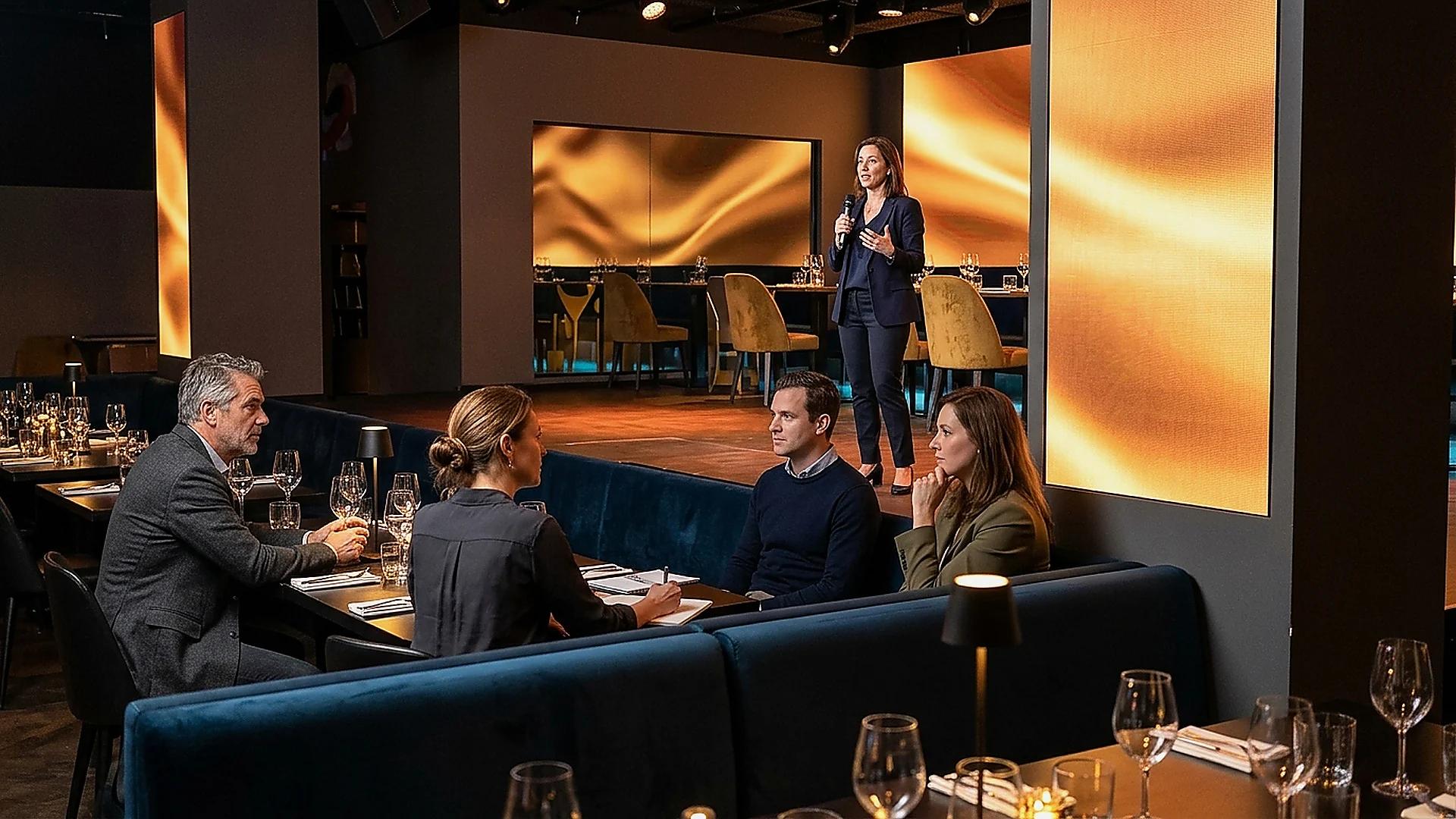
This is the heart of the convention. You choose it according to the number of participants and the layout: theatre style (chairs only), classroom style (chairs with a table in front), or round tables (cabaret). A theatre-style room holds more people; a room with round tables holds fewer, but lets you move to group work without anyone changing place. Check the ceiling height, the view of the screen from every seat, where the pillars are and whether the windows can be blacked out.
Breakout rooms
If there will be group work, you need smaller rooms close to the plenary, or a plenary room big enough to be divided into areas. Each group needs a table, a flip chart or a screen, power sockets and a bit of quiet. Moving from one floor to another loses ten minutes every time: allow for it in the agenda.
Service spaces
Welcome and registration, cloakroom, an area for coffee breaks, space for lunch, a room where speakers can prepare, and a store for materials. They sound like details, but over an eight-hour day these are the spaces that make the difference between a convention that runs smoothly and one that keeps stumbling.
| Layout | Used for | Pros | Cons |
|---|---|---|---|
| Theatre | Presentations, large audiences | Maximum capacity | No table to write on |
| Classroom | Training, long sessions | Table for laptops and notes | Reduced capacity |
| Round tables (cabaret) | Plenary with group work | Move to groups without changing place | Half the seats face away from the stage |
| U-shape | Meetings of up to 30 people | Everyone can see each other | Not suited to large groups |
Where to hold a convention in Milan
Hotels with conference centres
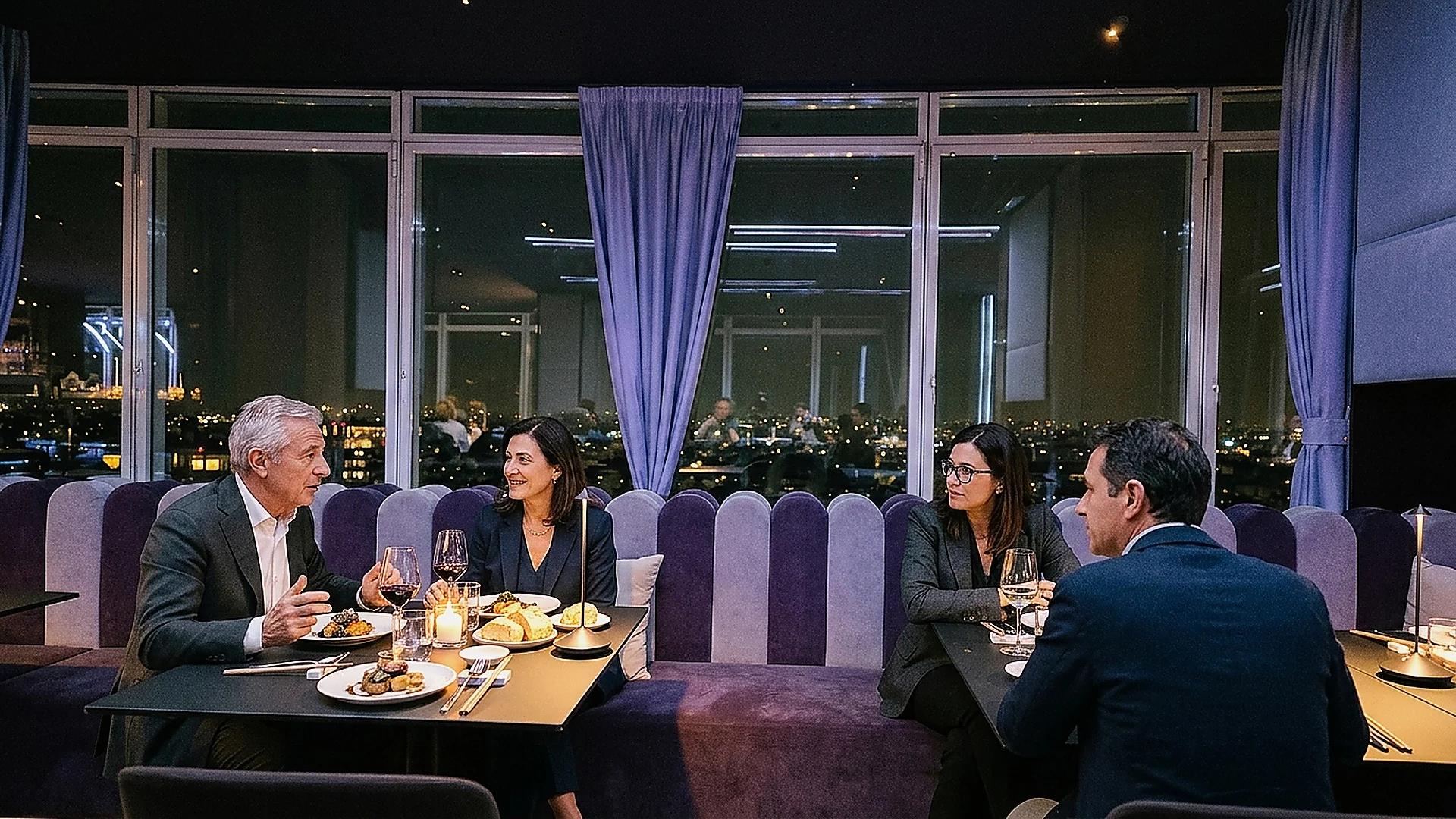
Hotels with conference rooms offer everything in one building: plenary room, breakout rooms, restaurant, and bedrooms for people coming from elsewhere. They are the most convenient option for two-day conventions with an overnight stay. Choose ones close to the stations or to the metro lines.
Conference centres
For very large conventions, Milan has proper conference centres. The biggest is Allianz MiCo, in the Portello and CityLife area, which also hosts international congresses. When a convention falls in the weeks of a major congress or trade fair, hotels and transport fill up: the calendar is on our site about Milan trade fairs. We also cover the area in the guide on corporate events in CityLife and Portello.
Former industrial spaces and auditoriums
For conventions that want a different atmosphere, there are the former industrial spaces of areas such as Tortona, Bovisa and Lambrate, to be fitted out with a stage, a screen and seating. They take more work and a budget for the technical side, but they let you build a setting to measure. The guide to corporate events in the Tortona district covers them.
Outside Milan
For a convention with an overnight stay somewhere that breaks the routine, people head to Brianza, Lake Como or towards Bergamo, to villas and hotels with conference rooms. You gain in concentration and lose a little in convenience for those arriving by train or plane.
The AV and technical side
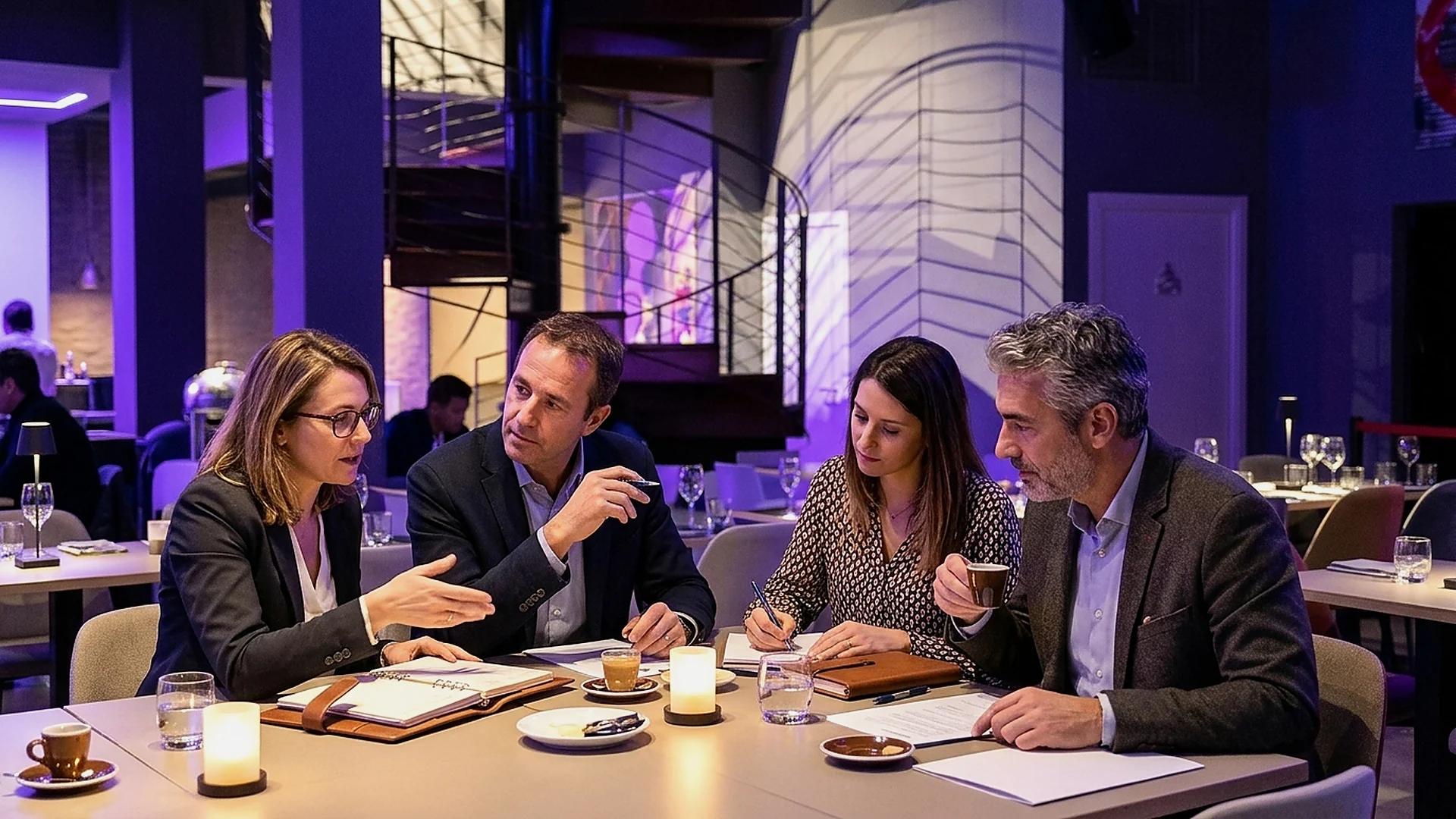
This is the item people most often underestimate. A convention with an excellent programme and a microphone that whistles is remembered for the microphone.
Audio
You need microphones for the speakers on stage (headset or lapel mics for those who move around, handheld mics for questions from the floor), a sound system suited to the room and a technician who looks after it all day. Run a test with every speaker, not just the first one.
Video
One or more screens visible from every seat, a projector or LED wall suited to the light in the room, and a control computer with all the presentations loaded in the same format. Ask speakers to use the company slide template and not to bring videos at the last minute: heavy files and unusual formats are the main cause of delays.
Lighting, control and filming
Lighting is there to make the speaker visible without dazzling them and to give rhythm to the changeovers between talks. If the convention is recorded or streamed live for those who can't attend, you need cameras, a control room and a dedicated connection, not the venue's wifi.
Interpreting
If part of the audience doesn't speak Italian, you need interpreters and headsets, or speakers who present in English with slides in both languages. Simultaneous interpreting requires booths and equipment: it has to be planned weeks in advance.
The agenda for the day
Here is an example of a one-day convention for about a hundred and fifty people. Adjust the times to your own programme.
| Time | Session | Notes |
|---|---|---|
| 8:30 | Registration and breakfast | Badges ready in alphabetical order |
| 9:30 | Opening by senior management | The message of the day, 15 minutes |
| 9:45 | Two talks in plenary | 20 minutes each plus questions |
| 11:00 | Coffee break | 30 minutes, not 15 |
| 11:30 | Group work | Mixed groups, each with a facilitator |
| 13:00 | Lunch | Buffet or served, 75 minutes |
| 14:15 | Groups report back in plenary | 5 minutes per group |
| 15:30 | Talk by an outside guest | Testimony or case study |
| 16:15 | Awards and close | Summary and next steps |
| 17:00 | End of the working day | Free time or transfer |
| 19:30 | Evening | Drinks, dinner and music |
The rhythm
Alternate listening and participation every hour and a half at most. Attention drops after lunch: that is the time for group work or a lively talk, not for presenting the figures. Leave real time for breaks: that is where people talk to each other, and it is often the most useful part of the day.
Rehearsals
The day before, or early in the morning, run a full rehearsal with all the speakers: walking on stage, microphone, slides, video, handover to the next speaker. A plenary session that starts on time and runs without a hitch nearly always comes from a good rehearsal.
Registration, badges and communication
Before the convention
Send the invitation with a registration form that collects name, role, office, dietary requirements, any overnight stay and attendance at the evening event. A week before, send the programme, the address, directions and the dress code.
At the entrance
Badges printed in alphabetical order, with name and office easy to read, a list for anyone who didn't register and a small pack with the programme and materials. With more than a hundred people, you need at least two desks to avoid queues. If there are outside guests, a different badge colour helps colleagues recognise them.
During and after
A channel for anonymous questions to the stage works well with large groups. After the convention, send out the main slides and a short questionnaire. People who couldn't attend will appreciate a written summary or the recording.
Catering and breaks
Breakfast and coffee breaks
Breakfast on arrival and two coffee breaks, one in the morning and one in the afternoon, are the basics. Allow for more coffee than you think, and some alternatives for people who don't drink milk or avoid sugar.
Lunch
A standing buffet is quicker and gets people moving; a served lunch is more comfortable but takes longer. On a packed day the buffet usually wins. Collect dietary requirements at registration and label the dishes clearly.
Guests from outside Milan
When participants come from other cities, the convention starts the day before. You need rooms booked in good time, directions from the stations and airports, and perhaps a group transfer. For groups that need bookings, tables and services for their free time, there is our concierge service in Milan. Remember that during the big trade fairs rooms sell out and prices go up.
The closing evening
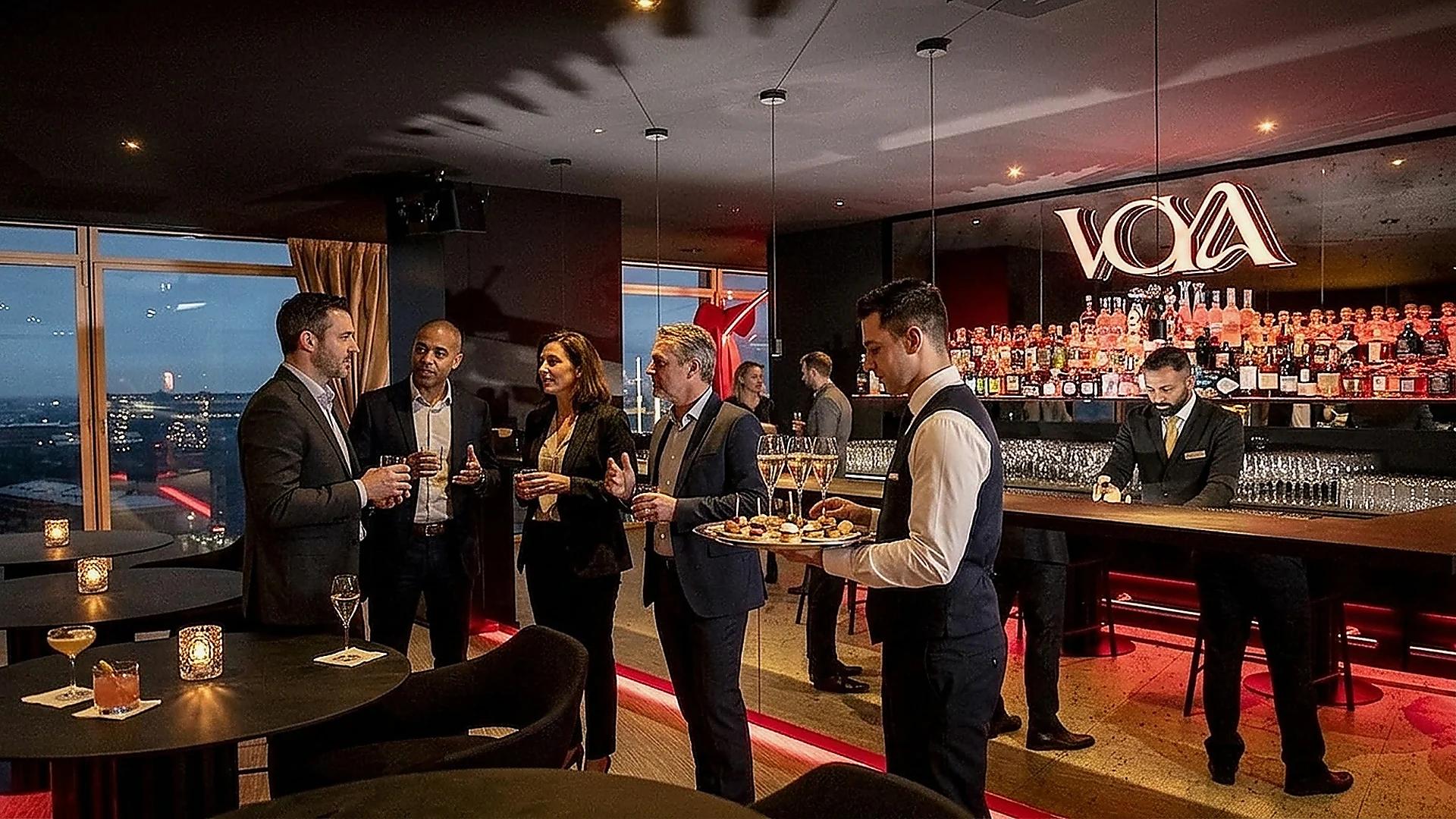
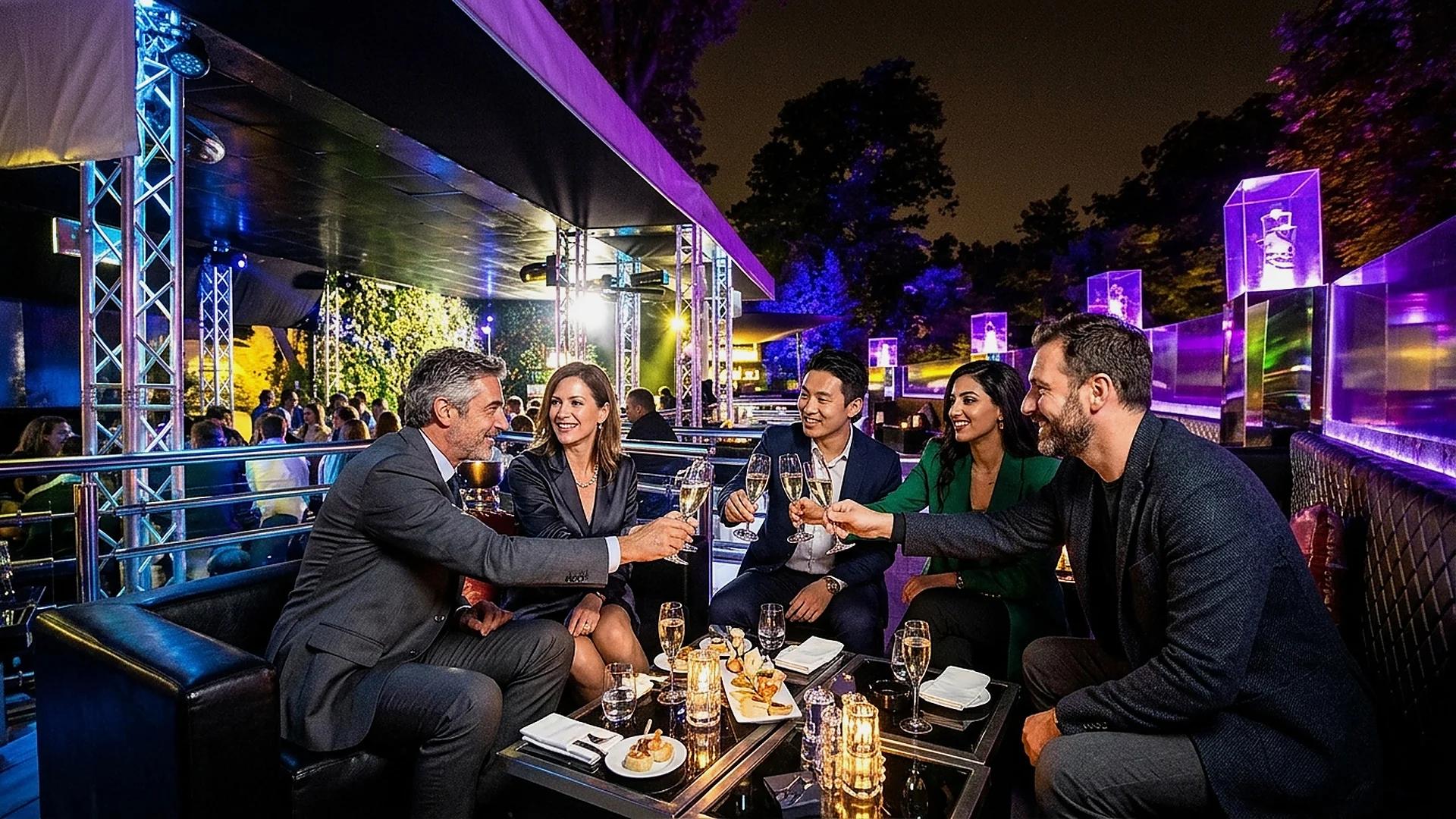
The evening is the part of the convention people remember longest. It is best kept separate from the working day, with a change of place or at least of atmosphere: drinks in a room with a view, a dinner, a little music. It is not the moment for more speeches: a toast and a thank-you at most. Menus and formats are described on the page about corporate dinners, and if you want something different there are our corporate event ideas.
The budget for a convention
At a convention, fixed costs weigh heavily: the room, the AV, the staging, the technical direction, the interpreters. That is why the budget is worked out on the total and not just on the cost per head. The cost items and how to present them to senior management are in the guide to the corporate event budget.
After the convention
Follow-up in the weeks after
A convention generates energy that fades quickly if nobody harnesses it. Within a week, send everyone a summary with the main messages, the decisions taken in the working groups and the names of the people to contact. If proposals came out of the groups, say what you will do with them and when you will report back: it is the simplest way to show that the day's work was worth it.
What to measure
Attendance compared with registrations, the questionnaire responses, the questions that came in during and afterwards, and, a few months later, the results against the objectives presented. Note the practical details as well: the break that was too short, the breakout room that was too far away, the speaker who overran. Next year's convention starts from these notes.
What to keep
Slides, recordings, photos, participant lists and the agenda with the actual times. File everything in one place, together with the quote and the invoices: whoever organises the next edition will have a starting point instead of a blank sheet.
The most common mistakes
- Too many speakers. The audience tires and the messages get muddled.
- Breaks that are too short. Fifteen minutes isn't enough for a coffee and a chat with a hundred and fifty people.
- No technical rehearsal. Problems come to light in front of everyone.
- Last-minute slides. The technical team can't check them.
- Breakout rooms that are far away. Every move costs a quarter of an hour.
- More speeches at the evening event. After a day of listening, people want to spend time together.
- No follow-up. Without a message afterwards, the convention stays a pleasant memory and little more.