What makes the Tortona district special
The Tortona district lies south-west of the centre, behind Porta Genova station, a short walk from the Darsena and the Naviglio Grande. For much of the twentieth century it was an area of factories and workshops. When the industries left, their sheds, warehouses and courtyards were turned into photo studios, showrooms, agency offices, galleries and event spaces. Today the district is one of the centres of Milanese design and fashion, and one of the areas most used for corporate events that need a space built to measure.
The former industrial spaces
What sets the area apart are its former industrial spaces: large, high-ceilinged rooms with exposed beams and pillars, concrete or resin floors, big windows. They are empty or nearly empty, and they are fitted out differently every time. That is precisely their advantage: a loft that hosted a fashion show yesterday can become the room for a dinner for a hundred people tomorrow, or the set for a presentation.
The design district
Every year, during Salone del Mobile week, the area becomes one of the main districts of the Fuorisalone, with hundreds of exhibitions and presentations. For the rest of the year it remains a neighbourhood frequented by creative people, fashion and design companies and photographers. On Via Tortona, in the former Ansaldo complex, you will also find Mudec, the Museum of Cultures.
The Navigli and the Darsena close by
A few minutes' walk away are the Darsena and the Naviglio Grande, with bars, restaurants and clubs. For an evening event, it means plenty of options for drinks beforehand or for after dinner, without needing a taxi.
Getting there
By metro
The stop to use is Porta Genova, on the M2, the green line, which connects directly with Cadorna, Garibaldi and Milano Centrale. Some M4 stops are also a short distance from the area: check which is nearest to your venue on the ATM website. From Porta Genova you reach Via Tortona on foot by crossing the bridge over the tracks.
By car and taxi
The district's streets are narrow and parking spaces are few, especially in the evening and on event days. For anyone coming by car, it is worth recommending a covered car park nearby. At the end of the evening taxis can be found, but on busy nights it is best to book them or give a precise pick-up point.
From the airports and stations
From Malpensa, take the train to Cadorna and then the M2 to Porta Genova. From Milano Centrale, the M2 goes to Porta Genova with no changes. From Linate you arrive by metro with at least one change. Times and routes should always be checked on the official ATM and Trenord channels.
| From | How | Notes |
|---|---|---|
| Milano Centrale | M2 direct to Porta Genova | No changes |
| Porta Garibaldi | M2 direct | No changes |
| Cadorna | M2 direct | A few stops |
| Duomo | M3 to Centrale then M2, or M1 to Cadorna then M2 | One change |
| Malpensa | Train to Cadorna, then M2 | One change |
| Linate | Metro with a change | Check the route on ATM |
Event spaces in the area
Lofts and sheds
These are the largest spaces, suited to events from a hundred to several hundred people. They have to be fitted out from scratch: tables, seating, lighting, sound, catering, sometimes even heating or air conditioning. They need an organiser to coordinate a lot of suppliers, but they let you create a one-off setting.
Photo studios
Many of the district's photo studios can be hired for events. They have white walls, backdrops, professional lighting and sometimes fitted kitchens. They are perfect for presentations, themed dinners and photo shoots linked to a launch.
Showrooms and galleries
Some showrooms and galleries open their spaces to private events, especially outside exhibition periods. They work well for medium-sized groups and for evenings where the setting is already part of the story.
Courtyards
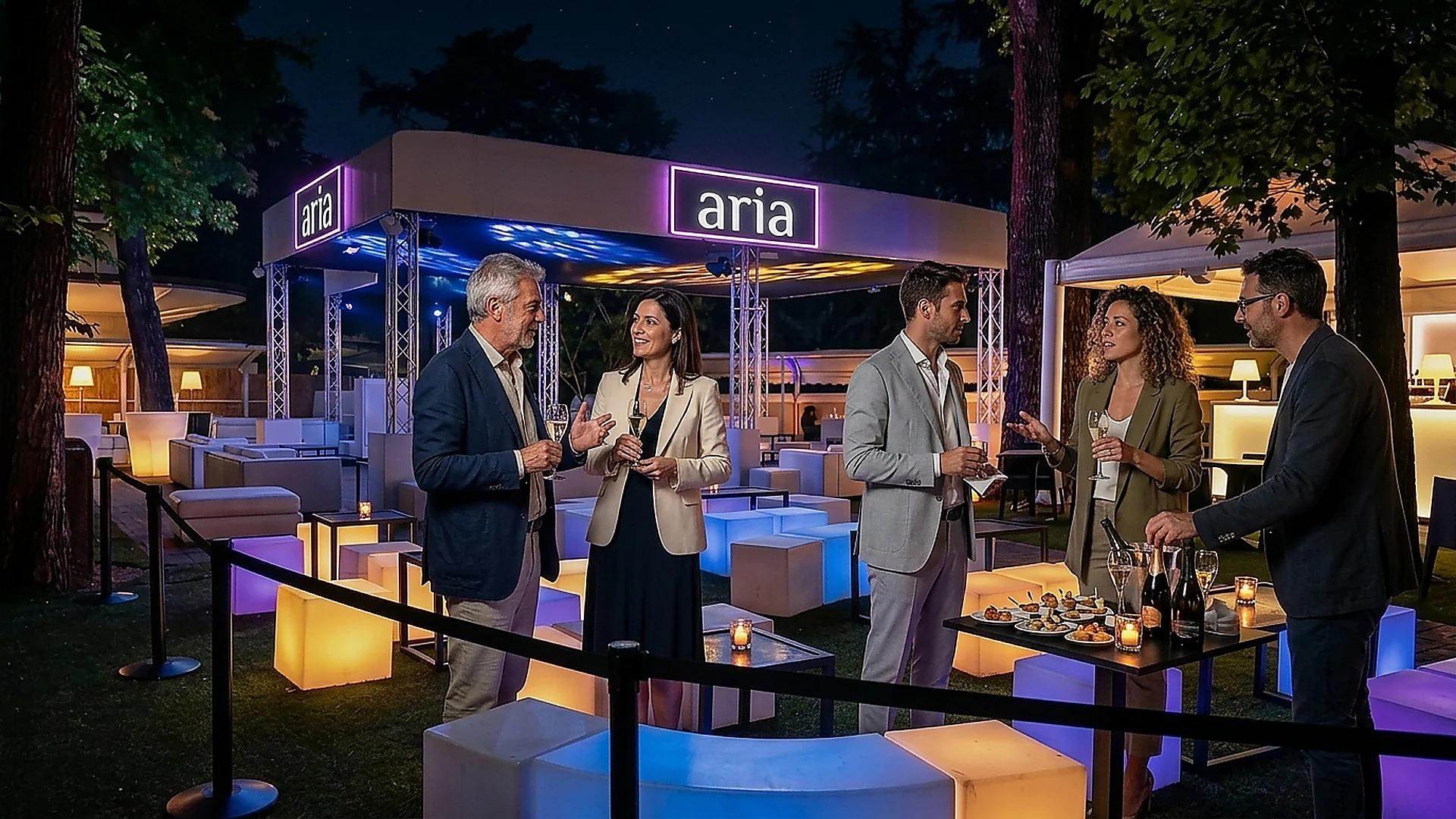
Behind many of the district's facades there are inner courtyards, some with plants and pergolas. From May to September they are lovely spaces for outdoor drinks and dinners, always with an indoor alternative.
Restaurants and bars
In the district and along the nearby Navigli there are restaurants with private rooms and bars with areas for groups. For a department dinner with no staging, they are the simplest choice. For drinks in the area, there is our site about aperitivo in Milan.
| Type of space | Guests | Fit-out | Suited to |
|---|---|---|---|
| Lofts and sheds | 100-500 | Complete, from scratch | Conventions, launches, large parties |
| Photo studios | 30-150 | Medium, lighting already there | Presentations, themed dinners |
| Showrooms and galleries | 30-120 | Light | Client evenings, presentations |
| Courtyards | 30-150 | Medium, with a plan for rain | Summer drinks and dinners |
| Restaurants and bars | 10-80 | Minimal | Department dinners, drinks |
What to ask a space you have to fit out
An empty space is a blank page: beautiful, but with a lot of questions to ask before you sign. These are the ones we ask, and the answers should be put in writing.
Structure and facilities
- What is the maximum authorised capacity for this type of event?
- Are there enough toilets for the number of guests, and are they accessible?
- Is there heating in winter and air conditioning in summer?
- Is there a kitchen, or does the caterer have to bring everything?
- Is there a cloakroom and an area for suppliers?
Technical
- How much electrical power is available, and where are the sockets?
- Can lighting and graphics be hung, and from which structures?
- Can the wifi cope with the expected number of guests?
- Is there a sound system, or does one have to be hired?
Rules and timings
- What time can the set builders come in, and how late can you stay?
- Are there limits on music volume because of the residents?
- Where do suppliers' vehicles unload, and are there permits to apply for?
- Who takes care of cleaning and rubbish at the end of the event?
Suppliers
- Are there compulsory suppliers for catering, AV or security?
- Can outside suppliers be brought in, and on what terms?
The formats that work best
Product launch
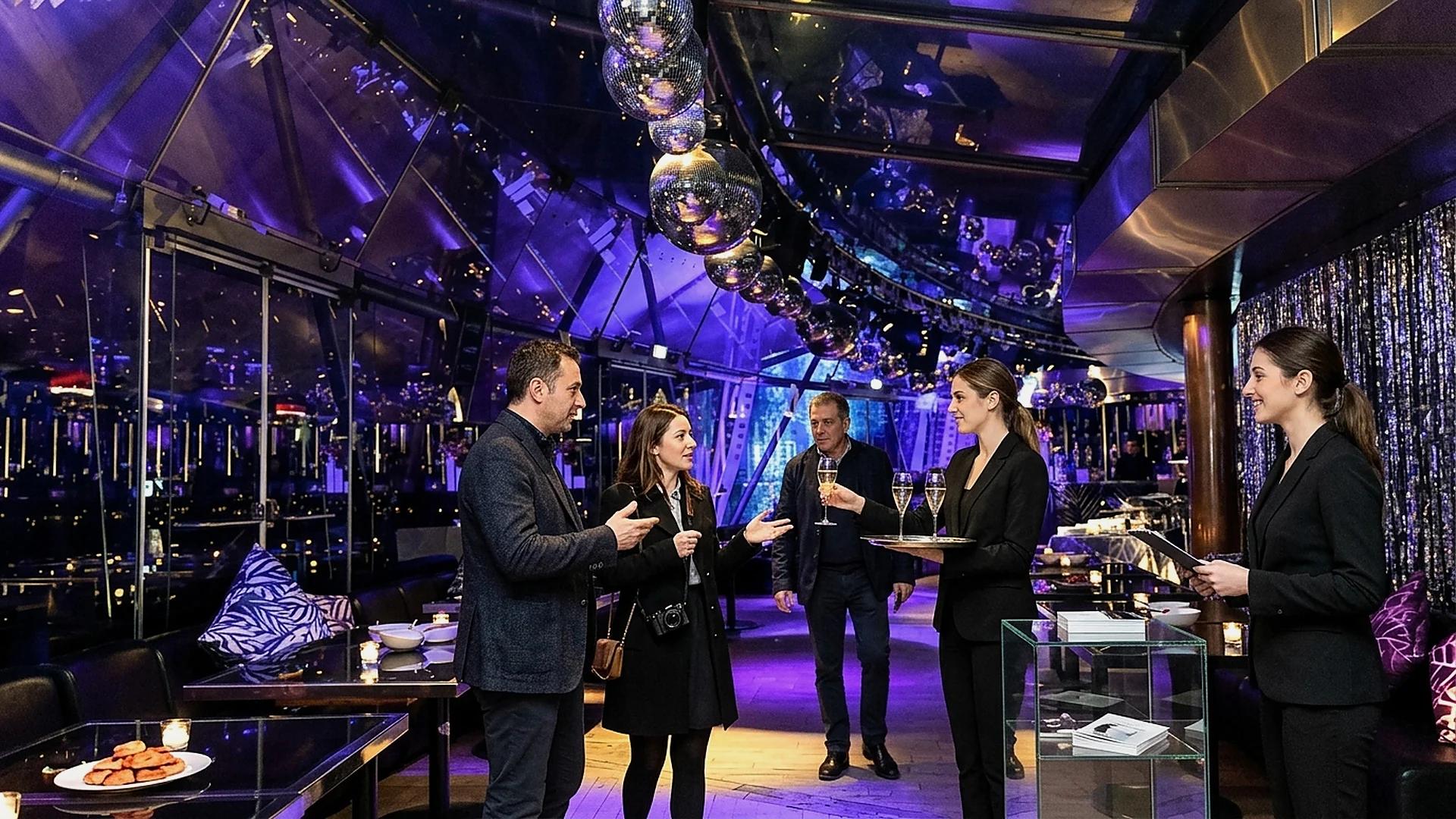
This is the format the area is best known for. For a launch event, a space you can transform lets you build a coherent setting around the product, with lighting, graphics and routes through the room. The running order, handling the press and the demonstration are described in the guide to the product launch.
A convention with atmosphere
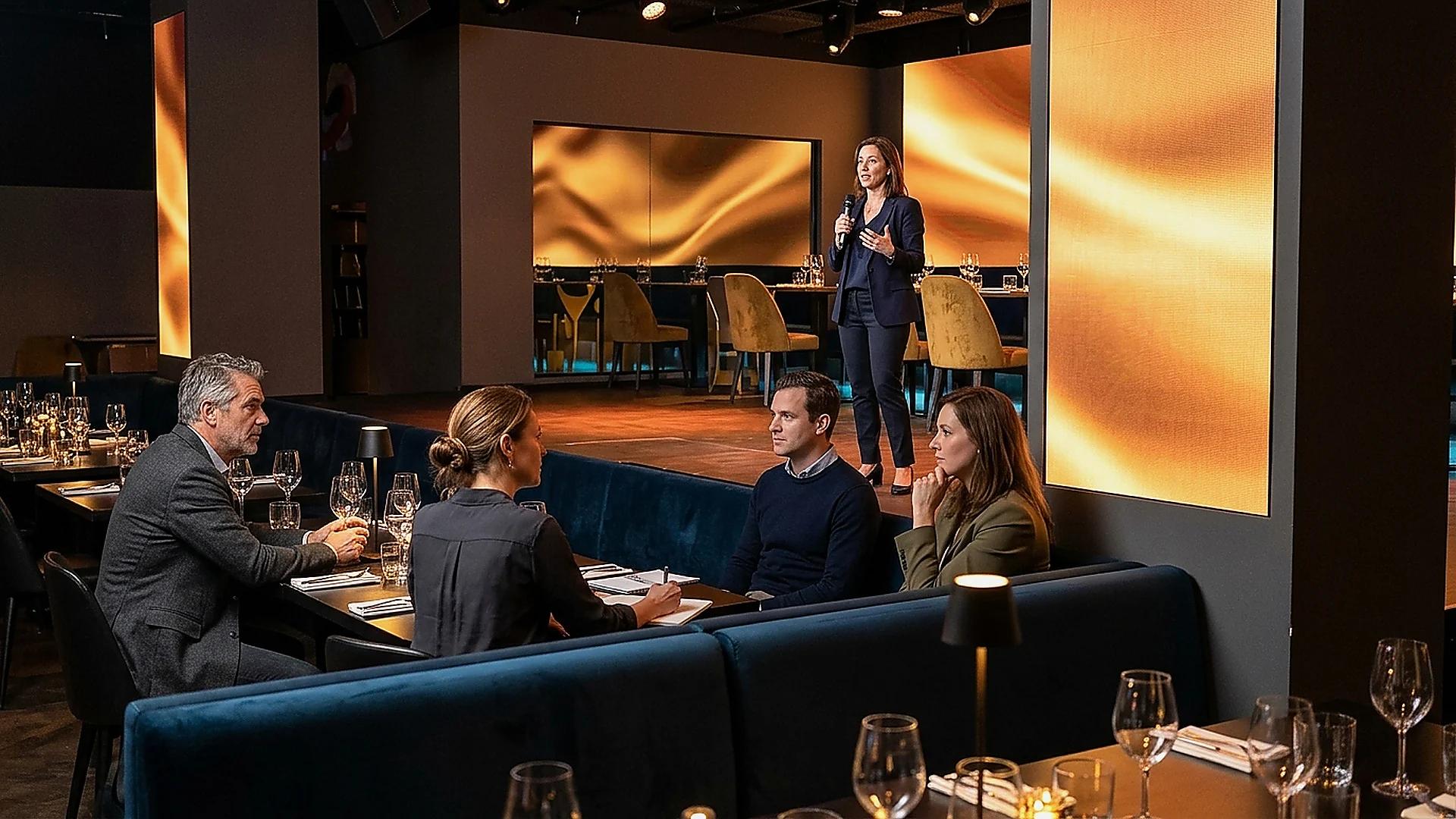
For a convention that doesn't want to look like a hotel function room, a loft with a stage, a screen and seating gives off a different energy. It needs a budget for the technical side and a longer set-up. The agenda for the day and the technical choices are in the guide to the company convention.
Company party
A big space with a DJ, lighting and a bar lends itself to end-of-year or end-of-project parties for large groups. Check the limits on music and the closing times: the area is residential too.
Themed dinner
A photo studio with a single long table, candles and a menu built around a theme is an idea that sticks in the mind. For the menu and the drinks, what is written on the page about corporate dinners applies. More suggestions are in the guide to corporate event ideas.
Creative team building
Photography, design or cooking workshops: many spaces in the area have equipment and professionals to run them. The possible group activities are collected on the team building page.
Design week
An opportunity and a risk
In April, during the Salone del Mobile, the Tortona district is one of the most crowded parts of the city. For a design, furniture or fashion company, it is the best moment to present yourself: the right audience is already there. For everyone else it is a period to avoid: spaces booked months in advance, much higher prices, packed streets, taxis impossible to find.
If you want to be there
You have to move a long way ahead, often from one year to the next for the most sought-after spaces. The programme and logistics for that week are covered on our site about Milan trade fairs.
If you want to avoid it
Move the event by a few weeks: in May or at the end of March the same spaces are available and the district is quiet.
The timings for an event in a space you fit out
| When | What to do |
|---|---|
| 3-4 months before | Choice of space, site visit, quote |
| 8-10 weeks before | Staging design, choice of caterer and AV |
| 4-6 weeks before | Permits, safety plan, supplier lists |
| 1-2 weeks before | Final floor plan, set-up times |
| The day before or that morning | Set-up, lighting and sound checks |
| Evening | The event |
| That night or the next day | Get-out, cleaning, handing back the space |
Set-up and get-out
In an empty space, set-up can take a whole day or more. The get-out needs planning too: some spaces ask for everything to be cleared that same night, others allow the next morning. These are hours that cost money, and they should go into the corporate event budget from the start.
The safety plan
For events with many people in spaces not designed to hold them, you may need a safety plan, dedicated staff and checks on the emergency exits. The rules depend on the number of guests and the type of event: ask the space and the organiser what is required.
A typical evening in the Tortona district
This is how a corporate evening for a hundred guests in a loft in the area usually unfolds.
| Time | Moment |
|---|---|
| 19:00 | Guests arrive, welcome in the courtyard |
| 19:15 | Drinks with catering and bar |
| 20:00 | A short presentation or greeting |
| 20:15 | Buffet dinner or dinner served at the tables |
| 21:45 | Dessert and a toast |
| 22:00 | Music and DJ |
| 00:00 | Event ends, within the time limits |
The courtyard as an entrance
If the space has a courtyard, use it for the welcome: guests come in gradually, pick up a drink and discover the main room when the moment comes. It is a simple way to create a small element of surprise.
After dinner on the Navigli
Anyone who wants to carry on will find the bars and clubs of the Darsena and the Naviglio Grande a few steps away. With a large group it is best to book ahead. For those who want to dance, Milan nightclubs offer reserved tables.
Practical tips
For organisers
- Do the site visit with the set builder and the caterer together: the technical questions get answered in a single visit.
- Give guests the exact street number and the entrance: many spaces are inside courtyards, not on the street.
- Have a plan for rain if you are using courtyards and outdoor spaces.
- Ask about volume and time limits: people live in the district too.
- Check the Fuorisalone dates before fixing yours.
For guests
- Come by metro if you can: parking is difficult.
- Bring an extra layer: large spaces are sometimes cool in winter and hot in summer.
- Check the last metro for the journey home, or book a taxi.
The district by type of company
Fashion, design and communications
For companies in these sectors, the area is a natural setting: many already have offices, showrooms or suppliers in the district, and their guests know it. An event here speaks the same language as their work. It is still worth standing out from yet another white loft with minimal staging: a clear theme, a well-thought-out menu, a route through the space for the guests.
Technology and service companies
For anyone presenting a digital product or a service, an industrial space gives the freedom to build screens, stations and interactive routes. Check the electrical power and the connection carefully: they are the two things most often missing in a space that started life as a factory.
Traditional companies
For a company used to hotel function rooms, an event in the Tortona district is a change of register that staff notice straight away. It works well for a convention that wants to mark a new beginning, or for an end-of-year party that is different from usual. Allow for more organisational work than with a room that is already equipped.
The most common mistakes
- Underestimating the fit-out. An empty space costs little to hire and a lot to equip.
- Forgetting the get-out. The night-time hours for handing back the space are charged.
- Ignoring the residents. Loud music after hours brings problems, and sometimes an early end to the evening.
- Organising during design week without meaning to. Everything costs more and nothing is available.
- Giving only the street address. Many spaces are inside courtyards and hard to find.
- No indoor alternative. In a courtyard, rain wipes out the drinks.